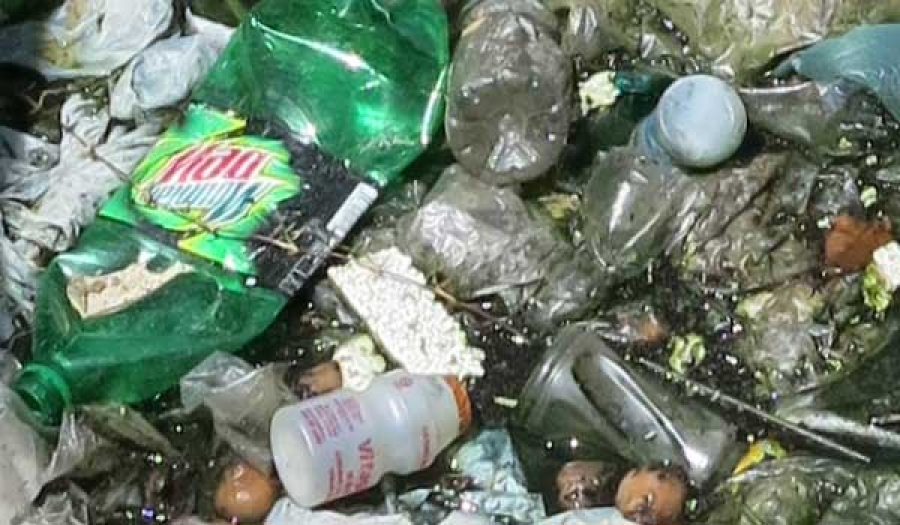
Driving on the highway from Nairobi to Mombasa or to my home town of Mumias I always keep a little more than the recommended distance between my car and the one in front of me because we Kenyan motorists are full of unpredictable behaviour – sudden brakes, turns and swerves and flying plastic missiles. I once got drive-blinded after my car windscreen was plastered with yoghurt thrown from the window of the commuter bus ahead of me. So I now keep a safe distance and close my car windows. Remembering this episode brings me to an issue of public health importance - do we have a littering problem in our country? I think we do.
One morning a few years ago plastic bags were discovered abandoned on Mombasa Road in Nairobi and shockingly they contained dead human fetuses. This got me wondering how anyone could be that brazen and callous to throw human fetuses on a road. In Luhya culture a woman after the misfortune of repeatedly losing children in infancy due to an ‘evil eye’ as it was often thought, would arrange to ‘throw’ her next newborn child on a footpath near her home so that when the it was ‘collected’ as it always would, it would be returned to its mother and be named Makokha which translates to ‘rubbish’. This name would ward off the ‘evil eye’ because even evil spirits dislike rubbish. Never was a dead human or animal ever thrown on the road nor rubbish thrown about. So my question today is that why do we Kenyans seem to embrace rubbish all around us when even the devil despises it? Why do we litter so nonchalantly?
Compelled by malevolent force
Seemingly some Kenyans love or are compelled by some malevolent force to throw carelessly around themselves anything they no longer need. Just toss it out seems to be the rule. On the highway you see thrown out of windows of vehicles plastic bags, packets of yoghurt, fruit peels, maize cobs, sugarcane pulp, name it. As we walk along our roads we carelessly throw about paper and spit out chewing gum. After public meetings the amount of litter that remains behind is veritable evidence of how many people came to the event.
I once worked in Garissa town and I observed that as you travel there multi-colour plastic bags trapped in tree branches present a picturesque mosaic of the duel between man and nature. In most other urban areas too plastics have become part of the landscape. Living in our society you would be excused to think that we are powerless to do anything to keep our environment clean. I almost believed this myself too until I went to Japan to study and to my amazement Japanese society uses more plastic than we do but in a much better way than us. They religiously mind their environment and will not only collect all garbage but will also sort it out into categories. Now do not think that this is done by the local authorities’ employees alone, it is done equally by all and sundry from an individual’s level upwards, be it a student or the big professor as was the case in my university. So my message today is that we Kenyans can also make our environment clean while we continue to use plastics.
Tell yourself today that you can do this starting with just one person, thyself. Make a promise to thyself to henceforth avoid unnecessary use of plastic bags and littering. Inside your car, house or neighbourhood designate a waste disposal container or area where everyone will dispose rubbish then later hand it over to the local or city waste management authorities. This is because throwing garbage out of the window of your car or house or around you only gives you a temporary relief from the ‘filth’ but dirties the environment and the filth later comes back to harm you in a bigger way. Teach this and insist on it to everyone around you especially children because attitudes are better adopted when they start early in life. If you are a leader at a public meeting disseminate the non-littering message and lead your people to clean up after the event.
Psychological discomfort
From a public health perspective littering and poorly managed garbage posses many health risks beyond being an obvious eye-sore. For example, parts of Nairobi were recently flooded as a result of torrential rains. This would have been less if we littered less because our drainage and sewerage systems are blockage by plastics and garbage. Decomposing garbage and blocked sewers emit strong smells that harm our psychological comfort and provoke respiratory diseases and allergies like asthma and bronchitis. Decomposing refuse also serves as breeding sites for flies, rats and fleas which are vectors of diseases like Cholera, Typhoid and Plague. When it rains blocked drainages and discarded cans and containers hold water from which malaria causing mosquitoes breed.
Away from human health, livestock dies due to eating of plastics which block their intestines. Crop yields are also reduced because of environmental degradation, desertification and global warming caused by litter. The list of the ill effects of littering is long but just one item, any item on this list is enough to seriously harm our health. As our great environmentalist and Nobel Laureate the late Professor Wangari Maathai once said, “In a few decades the relationship between the environment, resources and conflict may seem almost as obvious as the connection we see today between human rights, democracy and peace.” I paraphrase that and say in the days ahead in our urban areas, the relationship between public health and safety, hygiene and sanitation will become as obvious as the connection we see today between casual sexual behaviour and HIV-AIDS.
The author, Dr Amulundu KM, is an infectious diseases and public health specialist and acting Dean of the School of Health Sciences South Eastern Kenya University.