
Administrator
Dr Maurice Kalande Amulundu
MBCHB, MPH (UoN), DRPD, MTM (Nagasaki), D-OSH (JKUAT).
Public Health and Infectious Diseases Specialist.
Innovative Approaches to Improve Public Health Awareness.
 Public versus Clinical Health
Public health practice differs from clinical or hospital based practice in three fundamental ways. One is that public health practice focuses on groups or populations of people healthy or ill while clinical practice focuses only on the ill individual. Also clinical practice is constituted of a series of short-term repeated practitioner-client contacts while public health practice is a long term continuous practitioner-client interaction. Lastly public health practice is practitioner driven while clinical practice is client driven or put another way, public health practitioners go out looking for clients while clinical health practitioners sit in their offices, clinics or in hospital and wait for clients to come to them.
Now, if you set out every day to interact with diverse groups of people or whole communities to create awareness about any issue as public health practitioners do, you soon meet challenges which you would not if the interaction was with individuals and was only occasional. Let us talk about some of the unique challenges of creating and sustaining health awareness and how practitioners, institutions and governments can innovate ways to overcome them.
There are two broad levels of public health practice each with its attendant challenges. First the operational level where the peculiar challenge is sustenance of interest in and consumption of the public health goods and services by the population, and the strategic or policy making level where there is often a higher prioritization of the clinical health agenda over the public health one especially in countries like Kenya where infectious disease outbreaks occur all year round. These challenges however need not delay or derail the course if investment is made in some simple and pragmatic innovations to use on this mission of creating health awareness, preventing diseases, promoting healthy lifestyles and prolonging life for all, that is public health. This article will talk about some of the innovative strategies useful for the operational level of public health practice.
Multi-Prong Approach
First, health awareness creation is best done using multi-prong approach to both the message and the messenger. The great success Kenya has so far achieved in HIV and Tobacco awareness creation was through a multi-lateral approach and should be replicated in all other public health issues. All public health messages should be varied and adopted to suit different social and economic classes of our society and they should be passed on regularly and routinely using all types of media by all public and private institutions in this country. This means, like for HIV, public health messaging should be the mandate of all agencies of government and the private sector but not only the Ministry of Health as is often the case. Short and simple public health messages, for example “ Regular Exercise is Good for your Health”, can be displayed in public access areas of all institutions and can or be inscribed on all institution’s correspondence or as addendums to their logos and mottos. Today it is common to see every letter from a company with a header or footnote proudly declaring “ABCDE Company is ISO 9001:2008 Certified.” How about also adding “ABCDE Company Encourages Regular Hand Washing” or “ABCDE Company Supports Responsible Use of Alcohol”? The Ministry of Health can lead in encouraging all other institutions along this way.
The targeting of public health messages also requires some innovativeness. People in the upper socio-economic class may not relate closely to a message like “Boil Your Water Before Drinking” because they most likely drink bottled water which they consider safe. So how about a message like “Ensure Your Water is Safe Before Drinking”? This can apply across all classes. Better still would be a public health messaging system that is not based on a policy of one-message-fits all so that different wording is used to pass a similar message to different social classes. And lastly on this, the medium used for disseminating messages need to be varied according to the targeted audience. Recent surveys show that more youth than adults connect to social media and listen to social commentaries and on vernacular radio. A message about preventing teenage pregnancies or drug abuse for example, would best be aired on social media and on vernacular radio at the peak hour of social commentating.
Little Known Role-Models
Concerning the messenger, think of this, People are more likely to discuss their lifestyles and social habits, which are important components of public health, with their social peers than they would with strangers even if the strangers are of higher knowledge and experience in the matter at hand like their doctor. So a woman visiting a hair salon on a Saturday afternoon is more likely to listen to the opinions of her mates and her hair dresser concerning her dieting, family planning, weight control or annual health checks than she would listen to the opinions passed over the radio, TV or a billboard by a strange specialist called Dr Amulundu. Still even if she listened to the radio or TV messages she would not act on them until she has received endorsement from her mates and hair dresser at her salon. This is the point about role of the little known role-models and opinion gate-keepers in public health awareness. To effectively and widely reach out to people about their health let us also think about which influential but less famous people we can use to reach target audiences. The Ministry of Health can for example reach women better with a message about breast cancer screening if they recruited salon workers and trained them for even one day in a workshop on the importance of breast cancer screening so that they pass the message to their clients.
National Assimilation and Acculturation
In addition to choosing the right message and messenger it is also important to create the right forums that enable national assimilation and acculturation in good public health practices from a young age. Examples of these forums would be to create annual public health education days in schools and religious gatherings just like there are sports days and national prayer days. During such days school children can receive public health messages to educate them about health and they can engage in activities like environment cleaning in their schools and neighbouring communities. In time these events can expand to involve whole communities and will in time create a national culture of maintaining good personal, public and environmental sanitation and health. Countries like Rwanda are already doing this and results are showing with reports of cleaner cities.
Support Tools and Facilities
Lastly let us compliment our health messages with tools, facilities and services to support good health practices. For example let government and private institutions avail free water and ample waste disposal points in all publicly accessed places. It is a negligible cost for such an enormously beneficial service. Public toilets and waste disposal facilities are just as important as recreation facilities and relevant public health policies should exist for example to have refuse bins even inside commuters transport. In my travels around the country I have seen some county governments like Machakos and Kakamega are doing well by providing free sanitary facilities and services. This is important because those most likely to harm public health by engaging in undesired practices are often those who cannot afford or access paid up services.
The writer is an infectious diseases and public health specialist and acting Dean of the School of Health Sciences South Eastern Kenya University. This article was first published on the author’s blog www.health247.co .ke
Motoring Behaviour and Public Health

In one of my previous articles I discussed littering by motorists and their passengers as they travel on our roads which causes diseases and degrades the environment. Today I will discuss other undesired motoring behaviour and how they affect public health.
Drink and Drive
We have seen it or even partaken in it. You have saved money for years through your Sacco and finally you just bought that car or motorbike (popularly called boda boda) that you wished so much for. Everyone around you is excited about it. You set out feeling on top of the world, to show all and sundry in all possible ways that you have ‘arrived’. At the club, alcohol regularly and freely flows and you often take more than is legally allowed to drive a motor vehicle. In today’s urban culture drink-driving is discussed more in terms of the risk of detection by Alcoblow, the police and the National Transportation Authority than the risk of being involved in a road accident. In short most Kenyans who drink and drive fear being caught by the police than they fear being involved in a road accident. However from common sense as well as from public health perspective road accidents cause more harm to individuals, families and society than being arrested by the police. Entire wards in many of our level 4 and 5 hospitals are filled with accident victims, some who stay admitted for months on no end and if lucky to eventually leave hospital, have permanent and life-changing disabilities.
Child Drivers
Apart from driving under the influence of drugs or alcohol, other motoring behaviour some Kenyans engage in are equally injurious to our individual and collective health. I have observed cases where parents allow their under-age and unlicensed children to drive the family car. This behaviour is more common in the residential estates and during the weekends. Parents wanting to rest from the weekday routine of driving themselves around or perhaps just feeling the need to show off their families as modern and progressive allow their under-age children to drive the family car. This behaviour is dangerous to the children and families involved but of most concern it is dangerous to the public. Besides, it is against the law. There have been cases now and then of fatal accidents caused by under-age drivers. The message I want to pass to parents today is that because you love your child so much, do not endanger his or her life by allowing him or her to drive before they are mature enough to do it. Be patient and soon your beloved son or daughter will come of age and will drive. Your pride will be greater and more secure then than it is now when your child is an under-age driver at greater risk of being involved in an accident or being arrested for breaking the law. The legal age of 18 years was not decided on arbitrarily. There is sound scientific justification behind it.
Some parents drive their cars while carrying their young children on their lap. I find this most absurd because unlike the under-age drivers, these are often children below 5 years of age who do not see a car for anything else but a toy. You will sometimes observe the adult secured by a seat belt, steering the car from behind an un-belted 5-year old child seated on his or her lap, playing with the car steering wheel like it is a toy car at home. The adult driver is often distracted and more likely to be involved in an accident in which event a collision or sudden braking will cause the unsecured child to be smashed into car the windscreen. When that happens, the adult driver will by natural parental instinct be primarily concerned about saving the child and will thus be more likely to injure other road users by paying less attention to controlling the car.
Belt Up
When the modern car seat belt was first made mandatory by law in the Australia in the 1970s, it revolutionized motoring safety and was cited as one of the major public health successes of the 20th Century. Today, half a century later and in the so called information age, some Kenyans still drive without wearing seat belts. In all vehicles in Kenya, public and private alike, use of seat belts is mandatory by law but how many of us provide functioning seat belts in our vehicles? How many of us consistently wear seat belts?
The policy impact of wearing seat belts is that in case of a vehicle accident, the risk of death of the driver and front-seat passengers is reduced by 45% and the risk of serious injury is cut by 50%. This means that half of the people who die or are seriously injured every year on our roads would be alive and in perfect health today if they had buckled up. Or put another way if you are riding in a car without using a safety belt and an accident occurred, you are twice as likely to die or be seriously injured than if you were wearing a safety belt.
In economic terms as well, traffic accidents adversely affect our well-being at family and national level. The cost and time of accident hospitalization is many times more than the average cost and time of non-accident hospitalization. On top of the huge bills and time spent on hospitalization, matters are exacerbated by the fact that the majority of the motoring accident victims are the young, energetic and most productive members of our families and society. This leaves families and the nation impoverished because the bread winners are killed or disabled through motor accidents. Think about these things and next time before you drive or allow your vehicle to be driven out, ask yourself if you or your driver’s motoring behaviour is preserving and promoting your health, that of your loved ones and the public at large.
The writer is an infectious diseases and public health specialist and acting Dean of the School of Health Sciences South Eastern Kenya University.
Psychologist C Musyoka Discusses Alcoholism on TV
Behaviours that Harm Public Health Part 2 – Littering.
Driving on the highway from Nairobi to Mombasa or to my home town of Mumias I always keep a little more than the recommended distance between my car and the one in front of me because we Kenyan motorists are full of unpredictable behaviour – sudden brakes, turns and swerves and flying plastic missiles. I once got drive-blinded after my car windscreen was plastered with yoghurt thrown from the window of the commuter bus ahead of me. So I now keep a safe distance and close my car windows. Remembering this episode brings me to an issue of public health importance - do we have a littering problem in our country? I think we do.
One morning a few years ago plastic bags were discovered abandoned on Mombasa Road in Nairobi and shockingly they contained dead human fetuses. This got me wondering how anyone could be that brazen and callous to throw human fetuses on a road. In Luhya culture a woman after the misfortune of repeatedly losing children in infancy due to an ‘evil eye’ as it was often thought, would arrange to ‘throw’ her next newborn child on a footpath near her home so that when the it was ‘collected’ as it always would, it would be returned to its mother and be named Makokha which translates to ‘rubbish’. This name would ward off the ‘evil eye’ because even evil spirits dislike rubbish. Never was a dead human or animal ever thrown on the road nor rubbish thrown about. So my question today is that why do we Kenyans seem to embrace rubbish all around us when even the devil despises it? Why do we litter so nonchalantly?
Compelled by malevolent force
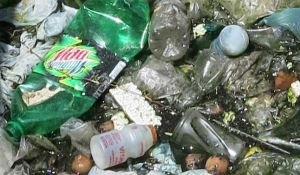
Seemingly some Kenyans love or are compelled by some malevolent force to throw carelessly around themselves anything they no longer need. Just toss it out seems to be the rule. On the highway you see thrown out of windows of vehicles plastic bags, packets of yoghurt, fruit peels, maize cobs, sugarcane pulp, name it. As we walk along our roads we carelessly throw about paper and spit out chewing gum. After public meetings the amount of litter that remains behind is veritable evidence of how many people came to the event.
I once worked in Garissa town and I observed that as you travel there multi-colour plastic bags trapped in tree branches present a picturesque mosaic of the duel between man and nature. In most other urban areas too plastics have become part of the landscape. Living in our society you would be excused to think that we are powerless to do anything to keep our environment clean. I almost believed this myself too until I went to Japan to study and to my amazement Japanese society uses more plastic than we do but in a much better way than us. They religiously mind their environment and will not only collect all garbage but will also sort it out into categories. Now do not think that this is done by the local authorities’ employees alone, it is done equally by all and sundry from an individual’s level upwards, be it a student or the big professor as was the case in my university. So my message today is that we Kenyans can also make our environment clean while we continue to use plastics.
Tell yourself today that you can do this starting with just one person, thyself. Make a promise to thyself to henceforth avoid unnecessary use of plastic bags and littering. Inside your car, house or neighbourhood designate a waste disposal container or area where everyone will dispose rubbish then later hand it over to the local or city waste management authorities. This is because throwing garbage out of the window of your car or house or around you only gives you a temporary relief from the ‘filth’ but dirties the environment and the filth later comes back to harm you in a bigger way. Teach this and insist on it to everyone around you especially children because attitudes are better adopted when they start early in life. If you are a leader at a public meeting disseminate the non-littering message and lead your people to clean up after the event.
Psychological discomfort
From a public health perspective littering and poorly managed garbage posses many health risks beyond being an obvious eye-sore. For example, parts of Nairobi were recently flooded as a result of torrential rains. This would have been less if we littered less because our drainage and sewerage systems are blockage by plastics and garbage. Decomposing garbage and blocked sewers emit strong smells that harm our psychological comfort and provoke respiratory diseases and allergies like asthma and bronchitis. Decomposing refuse also serves as breeding sites for flies, rats and fleas which are vectors of diseases like Cholera, Typhoid and Plague. When it rains blocked drainages and discarded cans and containers hold water from which malaria causing mosquitoes breed.
Away from human health, livestock dies due to eating of plastics which block their intestines. Crop yields are also reduced because of environmental degradation, desertification and global warming caused by litter. The list of the ill effects of littering is long but just one item, any item on this list is enough to seriously harm our health. As our great environmentalist and Nobel Laureate the late Professor Wangari Maathai once said, “In a few decades the relationship between the environment, resources and conflict may seem almost as obvious as the connection we see today between human rights, democracy and peace.” I paraphrase that and say in the days ahead in our urban areas, the relationship between public health and safety, hygiene and sanitation will become as obvious as the connection we see today between casual sexual behaviour and HIV-AIDS.
The author, Dr Amulundu KM, is an infectious diseases and public health specialist and acting Dean of the School of Health Sciences South Eastern Kenya University.
Behaviours that Harm Public Health Part 1 – Dirtying.
Picture a typical working day of a low income, self employed urban ‘hotelier’, a member of the ‘hustler’ population. Wake up at 5 am and start making tea and chapatis at your roadside ‘hotel’ near a high-rise construction site. By 10 am your hotel is full of all sorts of customers from the construction site workers, matatu crews, college students to nearby office workers. The customers come in for a cup of tea and a snack. Everyone is in a hurry, no one washes their hands. In fact there is neither equipment nor water for washing hands. This scenario plays out every day in urban areas be it in slums, low income neighbourhoods or the posh suburbs.
On your way home after work, are you one of those busy, modern men and women who buy vegetables and ask to have them chopped up before you leave the grocery? Have you ever eaten mahindi-choma or taken chai na chapati from these hotels? How fresh or well cooked was that food? Did you wash your hands? Have you ever wondered where the operators answer their calls of nature or where they wash their hands afterwards? Next time check to see how many have handkerchiefs and how clean they are, just in case they have flu. How about that beer, nyama-choma and mutura you enjoy so much at your local? Take an interest to see how the glasses or that wooden chopping board is cleaned. Is there running water and soap – even an improvised jerrican with a tap?
Examples of questionable personal and public hygiene practices around us abound. Some people urinate and defecate in the open; unhygienic hawkers of fruits, sugarcane and cooked food roam our roads and estates. A consequence of these behaviours is that diarrhoeal diseases repeatedly infect us. Many parts of Kenya are presently afflicted by disease outbreaks. 10 Kenyan counties and several cities big and small have in the last two months reported outbreaks of Cholera. I often observe behaviours which leave me thinking that perhaps out of public health ignorance or sheer ignominious grit, we urbanites often tempt fate far beyond comprehension. It is no wonder that these outbreaks frequently occur.
Urban dwellings are special places because unlike rural areas, people live and work in a small geographical space. This close proximity of living presents great opportunities for pooling resources for our common good but in turn requires intelligent approaches to issues in almost all spheres of our lives as individuals, families, communities and as a society. This is like a double-edged sword which gets bigger and sharper every day. By 2014 it was estimated that more than half of people worldwide lived in urban dwellings and this was projected to grow by 1.5% every year over the following 15 years. This growth estimate means that by the time our development blue-print, the Kenya Vision 2030 matures Nairobi with its present population of 3.5 million will have at least 4 million and all other Kenyan towns will be bigger than they are now.
This large population concentrated in a small space with dearth of life-sustaining resources therefore means that we unwittingly share everything good or bad, natural or unnatural that our environment throws at us. In terms of our health we share the air, smells, water, noise and even germs with our all literally very close neighbours. Infectious diseases therefore spread as fast as rumours and cures are as slow as the city peak hour traffic. We therefore cannot afford care-free behaviours concerning our hygiene and sanitation because whatever we do affects us and many other people around us. Positive behaviour change among us is important and needs to start from awareness about how our individual and collective behaviours cause or prevent infectious diseases among us. Beyond awareness we need individual and collective will-power and public health leadership to provide the means to the desired change.
Cholera which is presently killing people in our cities as well as Para-Typhoid, Typhoid, Dysentery, Escherichia Coli and Rotavirus are common diarrhoeal diseases whose causative germs are transmitted from person to person through poor personal and environmental hygiene practices. Using toilets, eating fresh and well cooked food, boiling drinking water and washing hands with soap and clean running water before eating or after visiting the toilet prevents almost all diarrhoeal diseases. Such simple and cheap everyday behaviours which we often take for granted are all we need to prevent the many deaths from Cholera that we recently been hearing of in Kenya. What is more, Cholera and Typhoid are more preventable than others because they require a large number of germs before the disease develops in us. This means that by the time we develop them we have literally been deep in shit for a long time. So before we blame the government or someone else for not doing enough to treat or prevent the diseases we often suffer from let us think about what we as individuals can do to protect ourselves and our loved ones from these diseases. The recent Ebola outbreak in West Africa for example, was controlled largely by simple individual positive behaviour. Good health is therefore much easier to achieve if each of us prevents ill-health and promotes good health through our good behaviour than when we wait to treat diseases. And it also costs very little this way, like just a walk to the nearby water point to wash your hands or lighting your stove to boil drinking water. To paraphrase what the late President John F Kennedy once said, “And so my fellow Kenyans, let us everyday ask not what our government or leaders can do for our health, but ask what we can each do for our public health.”
The author, Dr Amulundu is an infectious diseases and public health specialist and acting Dean of the School of Health Sciences South Eastern Kenya University.
Family Nutritional Attitudes and Obesity

Sunday is a special day for most Kenyan urban families. Working class families particularly relish it as a ‘family day’. For Christian Kenyans, Sundays start with a family church service. Men love Sundays afternoon outings because being under their wives’ watch they are free to take as much of their favourite drinks as they can with no worry at all about later having to explain the thinner wallets or the lapsed hours. The children and their mothers particularly love it because church is always followed by a family day out where children are free to indulge their gustatory fantasies unhindered and their mothers joining in too are also happy to have their husbands’ un-interrupted presence and attention. Because Saturday holidays for Kenyan men belong to the clubs as they belong to the beauty salons and chamas for their wives, couples being separated worry about their partners getting into some secret indiscretions. Come Sunday everyone is worry-free but jealous and protective of their partner so as to atone for Saturday's sins and honour the family day while enjoying all its attendant benefits.
Urban, modern foods
I am not a regular church worshipper but whenever I can I go through the whole two-part Sunday routine or my family drags me out to an after church for the family day session. While there I often watch trays of ‘urban’, ‘modern’ foods come to my table and more trays go past my table. The favourite foods for most urbanites are starches, meats and poultry, all fried in ponds of fats and oils, lavishly coated with tomato paste and mayonnaise and washed down liberally with pints of sweetened alcoholic and non-alcoholic drinks. Fruits and vegetables are rare and whenever they appear are in little quantities. The feasting goes on for hours. Afterwards the children will go off to bob their over-stuffed bellies on the bouncing castle or for face-painting and amusement by a clown as their parents sip more sweetened drinks and chatter while reading the newspaper or watching the English Premier League. As the day ends the satiated and inebriated family lumbers away to their car and drives home where house-helps lay out more of the same foods and drinks on their dinner tables. Weekend thus far is well spent. Satiety - beyond maximum. Physical activity - below minimum.
From a public health perspective however some key misconceptions are created in the process, which contribute to family obesity. Misconception about food - more, sweeter, fattier, meatier is better. Misconception about physical activity – exertion should be avoided at all costs. Kenyan doctors have warned that in many working class families obesity which previously was a problem of a few adults has now ‘devolved’ down the age groups to afflict children. One does not need to look too hard around in urban areas for them to see that this is true. Unlike before, obese children some below 10 years of age can now be found in some working class Kenyan families. This was previously a problem that was confined to some wealth-owning upper class families. It means therefore that the weight problem is growing and is becoming a public health issue. The greater public health concern however is that family knowledge and attitudes about lifestyles, food and nutrition and body weight are deficient and often harmful. If nothing is done to reverse it the problem will grow as more Kenyan move above the poverty line.
When your calorie intake exceeds requirements
Body weight is graded in ascending order from underweight, normal weight, overweight to obesity. Your ideal weight depends on your age, sex, body frame, height, occupation and level of physical activity. Ideal weight will thus vary from person to person and will change throughout a person’s life. Weight gain occurs when your food or calorie intake exceeds your requirements for maintaining your body in its present state and the extra calories are stored as bigger and bulkier organs and tissues. In common language you grow fat. Fat people are more likely than normal weight people to suffer from health problems like diabetes, hypertension, heart attack, stroke, arthritis, sleeping disorders and reduced sexual activity. They also become inactive and suffer low self esteem which affects their performance at home, social events, school and work. Children suffer these effects as much as adults.
So why is the problem of obesity growing and devolving down the social classes? Is it due to a new abundance of food and means? Are we knowingly or unknowingly causing obesity in ourselves and our children? Do we have beliefs, practices or attitudes about food and nutrition which encourage obesity in our families? What can we do as Kenyans to arrest and reverse this problem?
Deliberate overfeeding
I believe nobody knowingly occasions any of the above health problems in themselves or their loved ones by deliberately overfeeding. The increase in obesity is therefore a result of a new abundance of food and means occurring in families where ignorance, harmful beliefs, practices and attitudes about food and nutrition occur. In short new found wealth is meeting old resilient ignorance. The Sunday family day scenario I narrated is an example of this sorry state of affairs. We need to debunk myths that exist in our midst that certain foods especially vegetables and fruits when served alone on our meal tables are an indicator of poverty and hard times. Let us consume less processed sugar which apart from the teaspoonfuls of sugar we add to our tea, is abundant in the accompanying snacks. Sugar is also abundant in alcoholic and non-alcoholic drinks, dairy products and processed foods we buy from the supermarkets. Instead of frying most of our cooking let us use alternative and healthier methods like boiling, roasting and steaming. For those who love nyama choma and alcohol let us moderate our consumption. Let us also observe regular abstinence during which time we can take up a sport, hit the gym or jog with the rest of the family who will also benefit greatly from increased physical exercises.
These behaviour modifications can be challenging at the beginning but one day at a time and they will become healthy family traditions which we can bequeath to the next healthy generation.
The author, Dr Amulundu is an infectious diseases and public health specialist and acting Dean of the School of Health Sciences South Eastern Kenya University.